




Clearer skin,
prescribed online.
Prescription gels, creams and lotions for spots, blackheads and breakouts. Most people see a difference within 6–8 weeks — no GP appointment needed.
Start consultation- Order in 3 minutes
- Discreet, plain packagingPlain packaging
- Tracked UK delivery
- No subscription — order when you needNo subscription
- Dispensed in Leicester
Real results
Real patients.
Real skin.
-
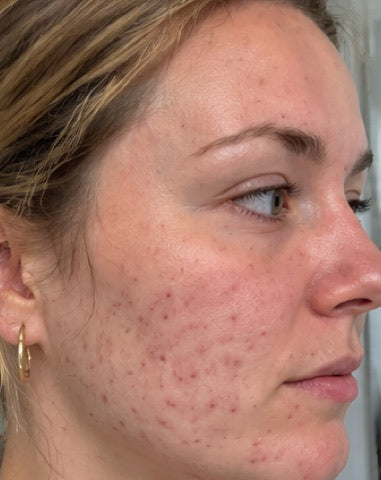
Before 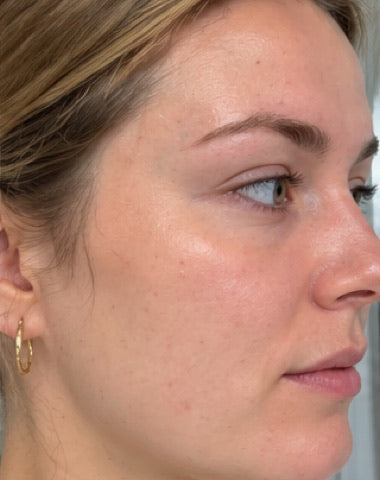
After [First name]’s journey
- Skin goal
- Clear spots
- Duration
- 3 months
“Optional short patient quote — one line about how their skin feels now.”
-
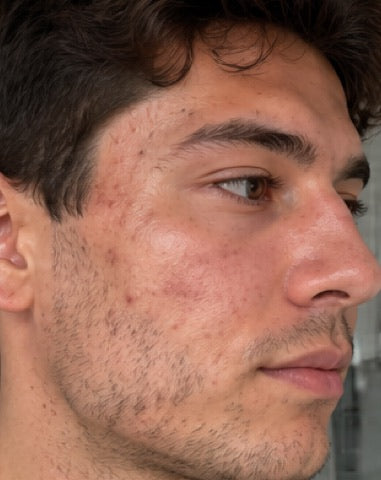
Before 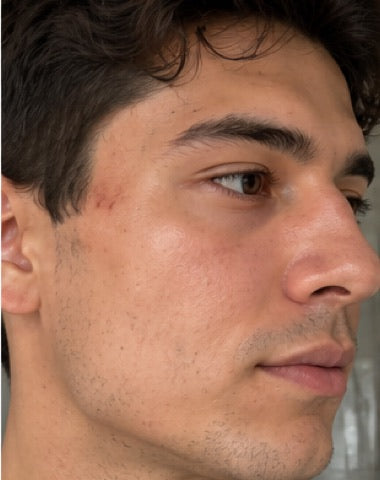
After [First name]’s journey
- Skin goal
- Reduce blackheads
- Duration
- 4 months
“Optional short patient quote — one line about how their skin feels now.”
-
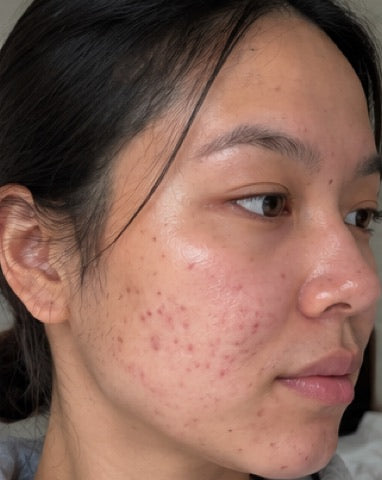
Before 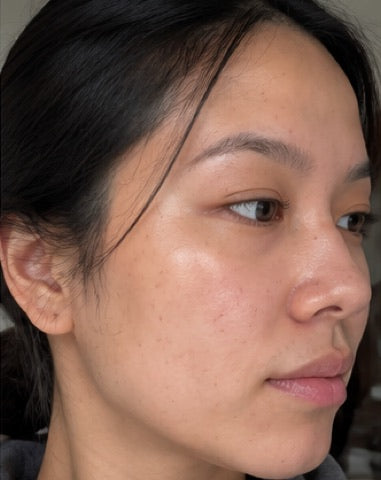
After [First name]’s journey
- Skin goal
- Calm jawline breakouts
- Duration
- 6 months
“Optional short patient quote — one line about how their skin feels now.”
No results match these filters yet.
Real YourMedicals patients, shared with written consent. Photos are unretouched. Individual results vary.Real YourMedicals patients, shared with written consent. Photos unretouched. Individual results vary.
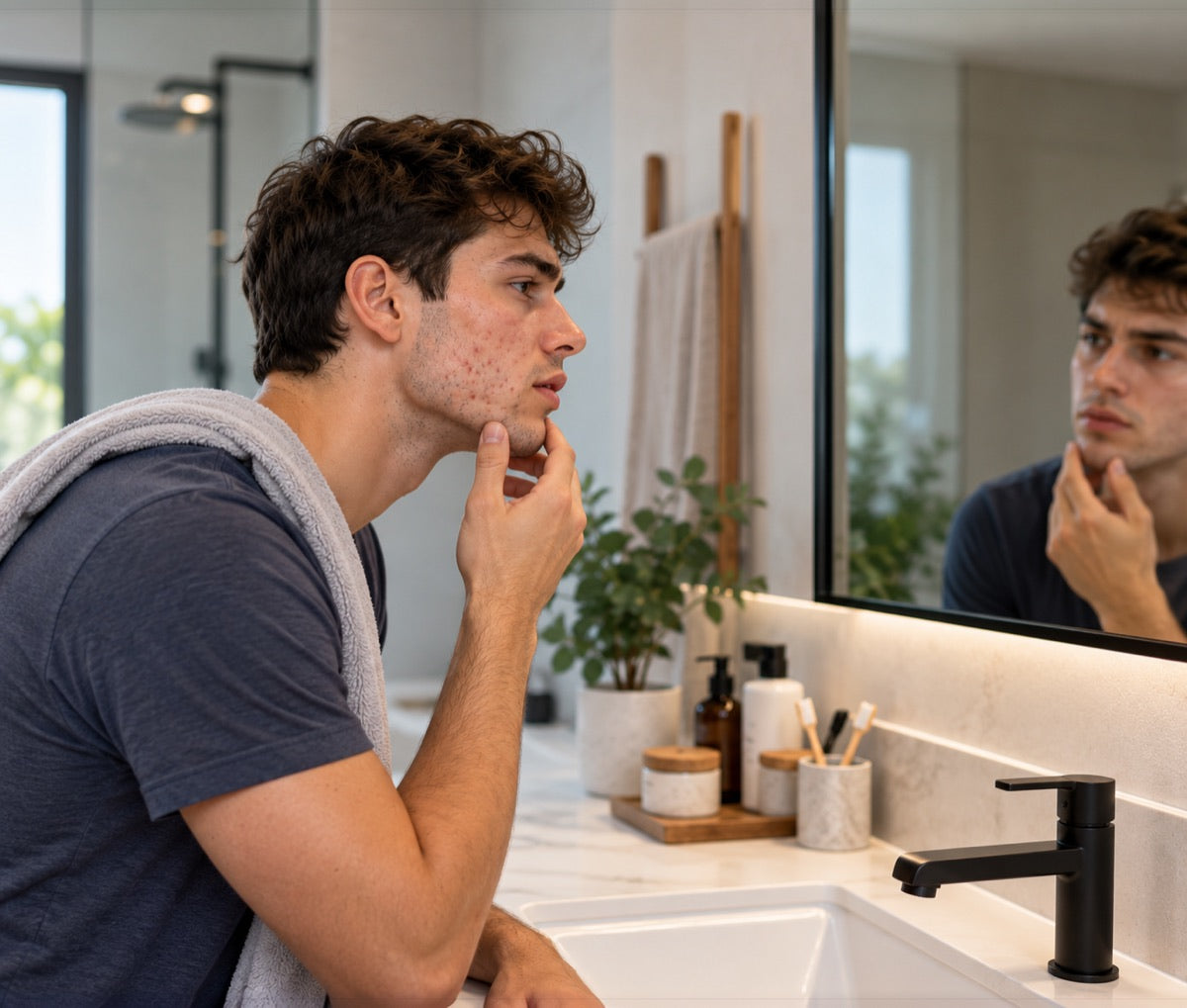
Is this clinic right for you?
Made for everyday acne
that won’t settle.
We treat mild to moderate acne in adults. If your acne is severe, painful or scarring, a GP or dermatologist is the right first step.We treat mild to moderate acne in adults. Severe, painful or scarring acne needs a GP or dermatologist.
This clinic suits you if…
- You’re 18 or over
- You have blackheads, whiteheads or red spots
- Your acne is on your face, chest or back
- You want treatment without a GP appointment
Speak to your GP instead if…
- You have deep, painful lumps or cysts
- Your acne is leaving scars
- You’re under 18
- Acne appeared suddenly with other symptoms
Understanding acne
What’s happening
in your skin.
Acne is a long-term inflammatory condition of the hair follicles and oil glands. Four things drive it — and each treatment targets one or more of them.
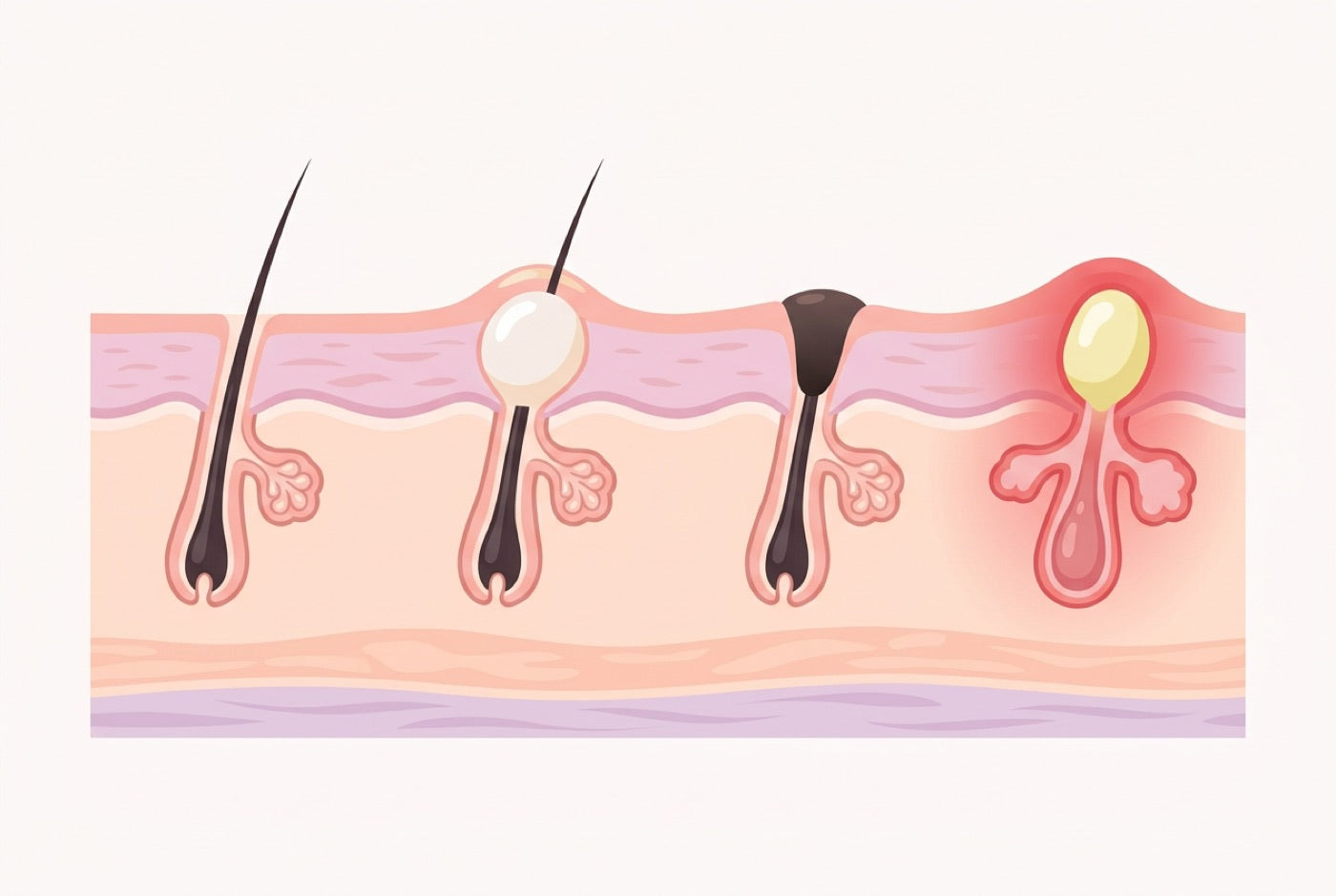
- Healthy pore
- Whitehead
- Blackhead
- Inflamed spot
- 01
Excess oil
Hormones (androgens) make oil glands produce more sebum.Hormones make oil glands produce more sebum.
- 02
Blocked pores
Dead skin cells build up inside the follicle, forming whiteheads and blackheads (comedones).Dead skin cells clog the follicle, forming whiteheads and blackheads.
- 03
Bacteria
Acnes bacteria multiply in the blocked, oily pore.Acnes bacteria multiply in the blocked pore.
- 04
Inflammation
The immune response creates red papules, pus-filled pustules and, in severe acne, deep nodules.Causes red papules and pus-filled pustules.
What we treat
Mild to moderate acne,
in all its forms.
Not sure what type you have? You don’t need to know — we’ll work it out from your answers.
-
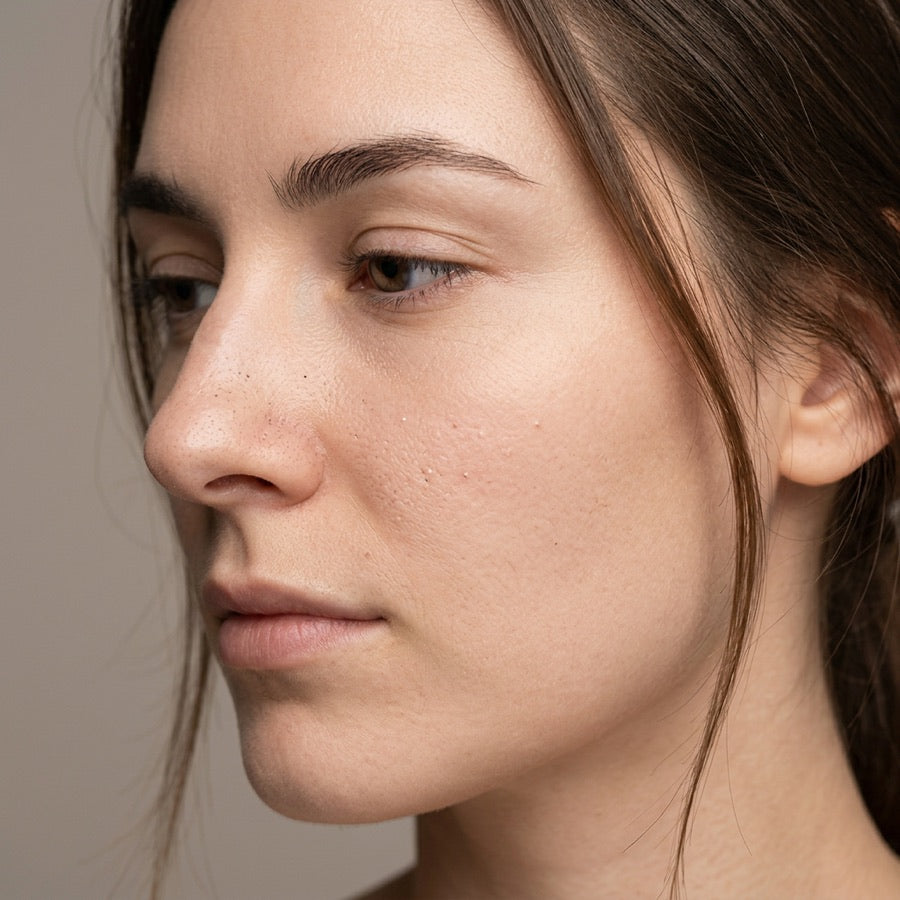
Blackheads & whiteheads
Clogged pores, usually on the nose, forehead and chin.Clogged pores on the nose, forehead and chin.
-
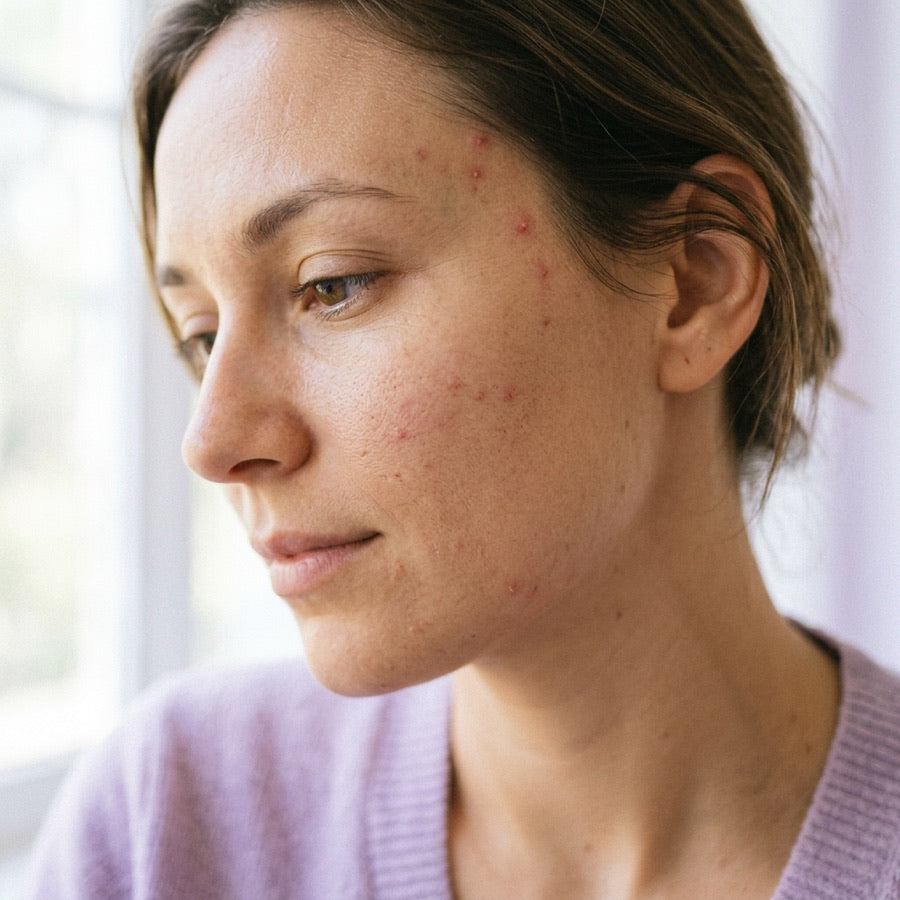
Red, inflamed spots
Small tender bumps and pus-filled spots across the cheeks.Tender bumps and pus-filled spots.
-
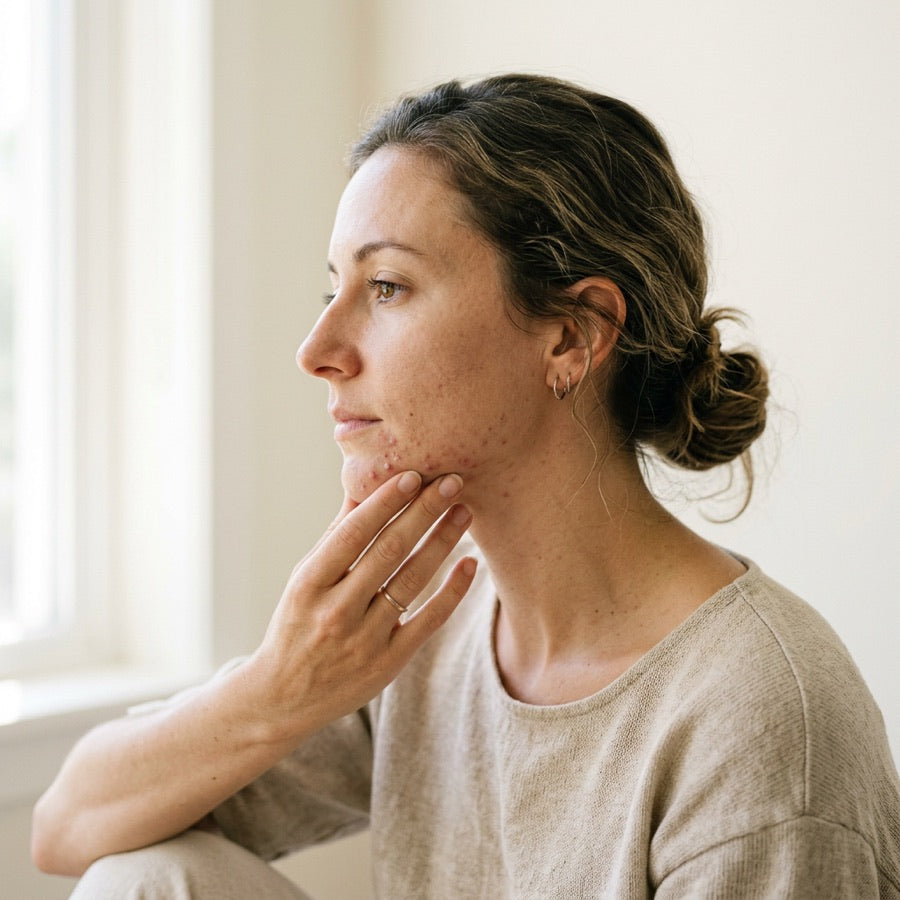
Jawline & chin breakouts
Common in adults and often flares with hormonal changes.Common in adults, often hormonal.
Mild to moderate acne
- Any number of blackheads or whiteheads
- Up to 34 red or pus-filled spots
- Up to 2 nodules (deep, firm lumps)Up to 2 nodules
Moderate to severe acne
- 35 or more red or pus-filled spots
- 3 or more nodules, or painful cysts
- Scarring or dark marks left behind by spotsScarring or dark marks
Severity grading based on NICE guideline NG198, Acne vulgaris: management. Your answers are reviewed against this before any treatment is approved.Based on NICE guideline NG198.
Treatments
Prescription acne
treatments.
Gels, a cream and a lotion — all applied to the skin. You’ll only be offered options that are safe and suitable for you.You’ll only be offered options that are safe and suitable for you.
-
Lotion · 30ml
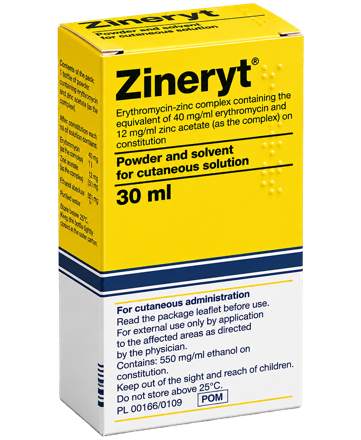
Lotion · 30ml
Zineryt Lotion
Erythromycin + zinc acetate
- How to use
- Twice daily, morning & evening
- Course
- 12 weeks, then review
Twice daily · 12-week course
From£18.99
Start consultationStart -
Gel · 30g
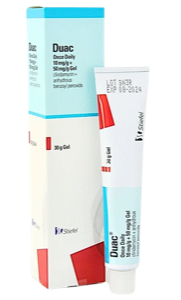
Gel · 30g
Duac Once Daily Gel
Clindamycin + benzoyl peroxide
- How to use
- Once daily, in the evening
- Course
- 12 weeks, then review
Once daily, evening · 12-week course
From£24.99
Start consultationStart -
Gel · 30g
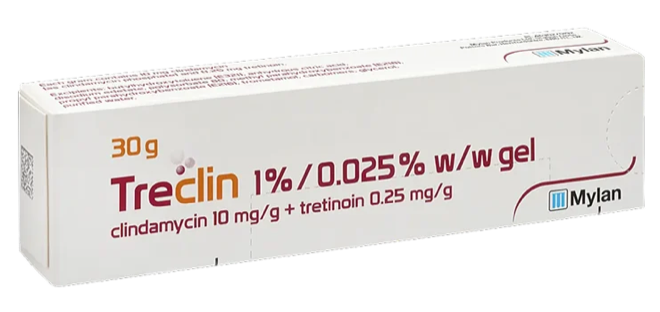
Gel · 30g
Treclin Gel
Clindamycin + tretinoin
- How to use
- Once daily, at bedtime
- Course
- 12 weeks, then review
- Pregnancy
- Not suitable (contains a retinoid)
Once daily, bedtime · 12-week course
Not suitable in pregnancy
From£27.99
Start consultationStart -
Gel · 30g
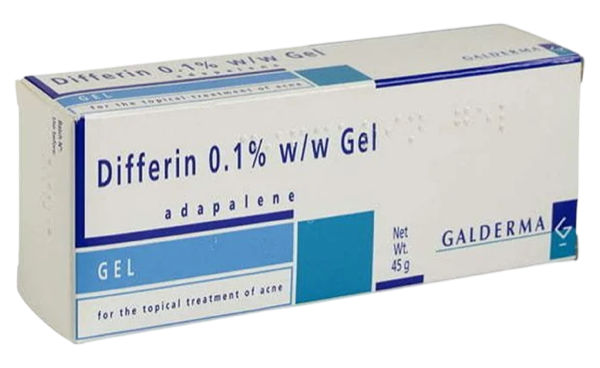
Gel · 30g
Differin Gel
Adapalene 0.1%
- How to use
- Once daily, at bedtime
- Course
- 12 weeks, then review
- Pregnancy
- Not suitable (contains a retinoid)
Once daily, bedtime · 12-week course
Not suitable in pregnancy
From£29.99
Start consultationStart -
Cream · 30g
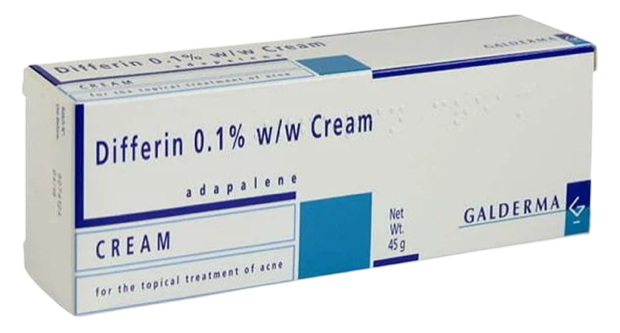
Cream · 30g
Differin Cream
Adapalene 0.1%
- How to use
- Once daily, at bedtime
- Course
- 12 weeks, then review
- Pregnancy
- Not suitable (contains a retinoid)
Once daily, bedtime · 12-week course
Not suitable in pregnancy
From£29.99
Start consultationStart -
Gel · 60g
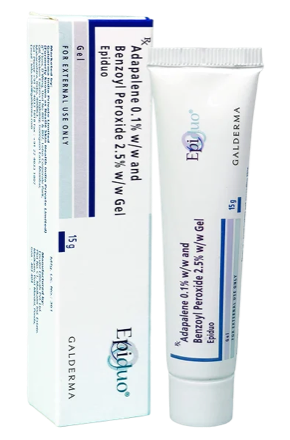
Gel · 60g
Epiduo 0.1% Gel
Adapalene + benzoyl peroxide
- How to use
- Once daily, in the evening
- Course
- 12 weeks, then review
- Pregnancy
- Not suitable (contains a retinoid)
Once daily, evening · 12-week course
Not suitable in pregnancy
From£54.99
Start consultationStart -
Cream · 30gSold out
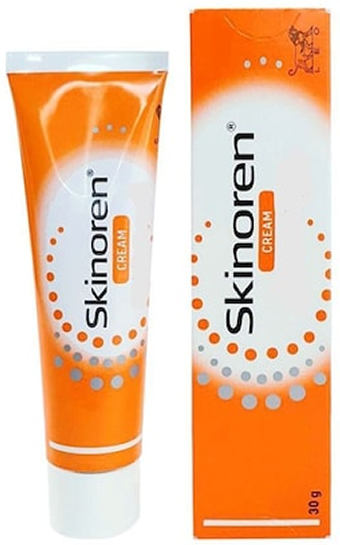
Cream · 30g
Skinoren 20% Cream
Azelaic acid 20%
- How to use
- Twice daily, morning & evening
- Course
- 12 weeks, then review
Twice daily · 12-week course
From£17.99
Sold out -
Gel · 30gSold out
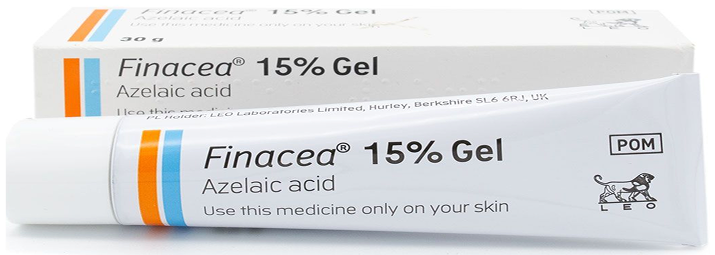
Gel · 30g
Finacea 15% Gel
Azelaic acid 15%
- How to use
- Twice daily, morning & evening
- Course
- 12 weeks, then review
Twice daily · 12-week course
From£19.99
Sold out
iYou’ll only be offered treatments that suit your answers. Some options aren’t suitable during pregnancy or breastfeeding, alongside oral antibiotics, with certain bowel conditions or with specific allergies.You’ll only be offered treatments that suit your answers — some aren’t suitable in pregnancy, breastfeeding, with oral antibiotics or certain allergies.
The science
How the active
ingredients work.
Most of our treatments combine two actives, so they work on more than one cause of acne at once.
-
Adapalene · Tretinoin
Retinoids
Speed up skin-cell turnover to unclog pores and stop new comedones forming. Also calm inflammation.Unclog pores and stop new comedones forming. Calm inflammation.
Found in
Differin · Epiduo · Treclin
Common side effectsSide effects
Dryness, peeling and sun sensitivity. Can cause a temporary flare in the first weeks. Not suitable in pregnancy.Dryness, peeling, sun sensitivity, early flare. Not in pregnancy.
-
Antibacterial
Benzoyl peroxide
Kills acne-causing bacteria without causing antibiotic resistance, and helps loosen blocked pores.Kills acne bacteria without antibiotic resistance; loosens blocked pores.
Found in
Duac · Epiduo
Common side effectsSide effects
Dryness and stinging. Can bleach hair, towels, bedding and clothing.Dryness, stinging. Can bleach fabrics and hair.
-
Clindamycin · Erythromycin
Topical antibiotics
Reduce bacteria and inflammation in the pore. Best combined with another active to limit antibiotic resistance.Reduce bacteria and inflammation. Best combined with another active.
Found in
Duac · Treclin · Zineryt
Common side effectsSide effects
Mild irritation. Rarely, clindamycin can affect the bowel — stop and contact us if you get persistent diarrhoea.Mild irritation. Rarely, bowel upset with clindamycin.
-
Supporting ingredientSupporting
Zinc acetate
Has a soothing, anti-inflammatory effect and is paired with erythromycin in a lotion base.Soothing, anti-inflammatory partner to erythromycin.
Found in
Zineryt
Common side effectsSide effects
Mild stinging or dryness where applied.Mild stinging or dryness.
In line with UK guidance
NICE recommends a 12-week course of a combination topical treatment as first-line care for mild to moderate acne.NICE recommends a 12-week combination topical treatment as first-line care for mild to moderate acne.
- ✓Adapalene + benzoyl peroxideEpiduo
- ✓Tretinoin + clindamycinTreclin
- ✓Clindamycin + benzoyl peroxideDuac
How it works
Three steps.
No waiting room.
No GP appointment, no video call. If treatment isn’t right for you, you’re refunded in full.
-
 01
Answer a few questions
Around 3 minutes on your phone — your skin, health and any medicines you take.Around 3 minutes — your skin, health and medicines.
-
 02
We check it’s right for you
Our clinical team checks your answers and approves the right treatment.
-
 03
Delivered discreetly
Dispensed by our Leicester pharmacy and sent tracked in plain packaging.Dispensed in Leicester, tracked, in plain packaging.

Your consultation
What we’ll
ask you.
Around 15 quick questions, mostly yes or no. Your answers help us rule out anything that would make a treatment unsuitable — so the options you see are safe for you.Around 15 quick questions, mostly yes or no — so the options you see are safe for you.
Start consultation-
01
Your health
- Your age
- How severe your acne is
- Any allergies to acne ingredients
- Pregnancy or breastfeeding
Age · acne severity · allergies · pregnancy or breastfeeding
-
02
Medical history
- Bowel conditions (IBD, colitis)
- Personal or family skin cancer
- Eczema, rosacea or inflamed skin
Bowel conditions · skin cancer history · eczema or rosacea
-
03
Current medicines
- Oral antibiotics
- Blood thinners such as warfarin
- Steroids or muscle relaxants
Oral antibiotics · blood thinners · steroids
-
04
Using it safely
- Results take 6–8 weeks
- Sun protection
- Managing early irritation
- Optional: sharing with your GP
Results in 6–8 weeks · sun protection · irritation · GP sharing (optional)
Using your treatment
Getting the best
from your treatment.
Simple habits make the biggest difference. Always follow the leaflet and label that come with your medicine.
-
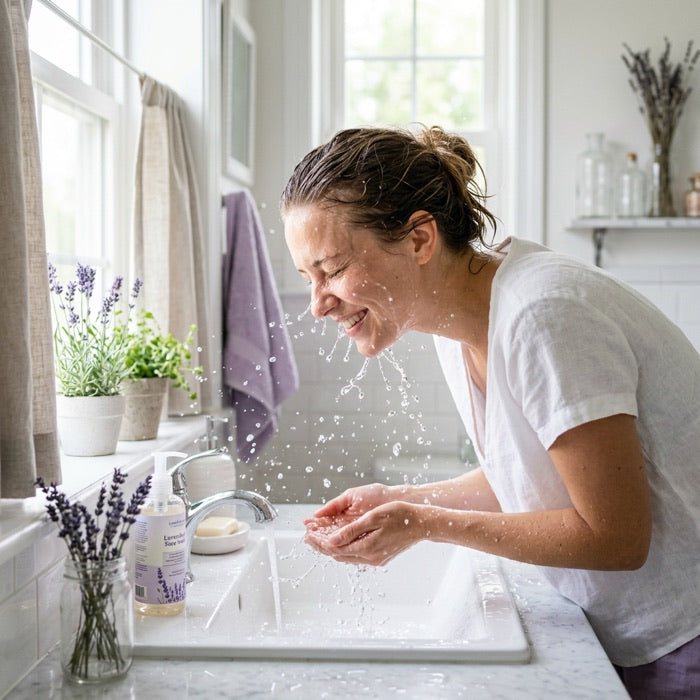
Cleanse, then dry
Wash with plain water or a mild cleanser and pat skin dry before applying.Plain water or a mild cleanser, then pat dry.
-
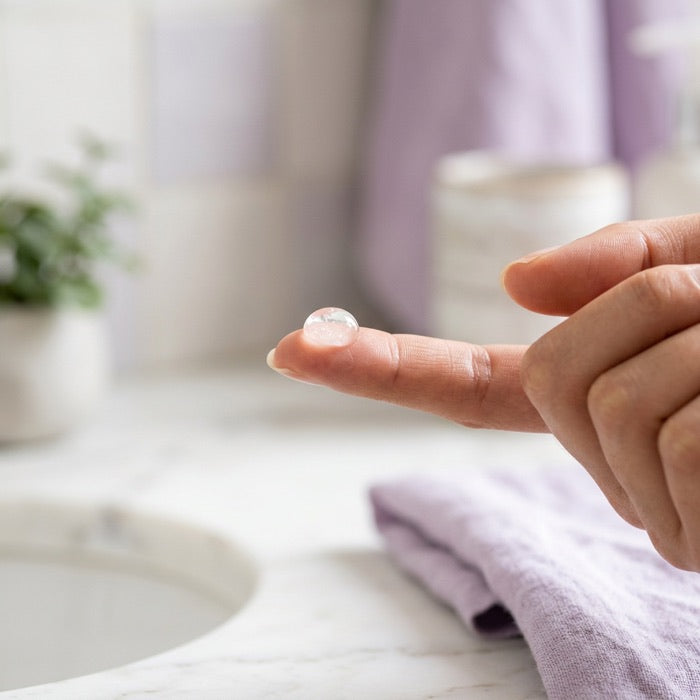
A thin layer is enough
Use a small amount over the whole area — not just on individual spots.Cover the whole area, not just individual spots.
-

Protect from the sun
Some treatments make skin more sun-sensitive. Use SPF and avoid sunbeds.Use SPF and avoid sunbeds.
-
Give it6–8
weeksBe patient and consistent
Mild dryness or redness early on is common. Use it less often if needed, and keep going.Early dryness or redness is common — use it less often if needed and keep going.
Weeks 1–2
Skin adjusts
Some dryness, peeling or redness is normal as skin gets used to treatment.
Skin adjusts — some dryness or redness is normal.
Weeks 6–8
Spots start to settle
Fewer new breakouts and calmer existing spots for most people.
Spots start to settle for most people.
Week 12
Review & reorder
Reorder when you need to, or ask to switch if it isn’t working for you.
Reorder, or ask to switch if it isn’t working.
Safety
Side effects and
when to get help.
Most side effects are mild and settle as your skin adjusts. Always read the patient information leaflet that comes with your medicine.
Expected
Common in the first weeks
- Dryness, flaking or peeling
- Redness, stinging or a warm feelingRedness or stinging
- A temporary flare of spots (retinoids)A temporary flare (retinoids)
- Skin more sensitive to the sunMore sensitive to the sun
What to do
Reduce irritation
- Start every other night and build upStart every other night
- Use a gentle, non-comedogenic moisturiserUse a non-comedogenic moisturiser
- Avoid scrubs, toners and waxing treated skinAvoid scrubs and waxing treated skin
- Keep away from eyes, lips and broken skin
Get help
Stop and contact us
- Severe burning, blistering or swelling
- Signs of an allergic reaction — get urgent help if your face, lips or throat swellFace, lips or throat swelling — get urgent help
- Persistent or bloody diarrhoea while using clindamycinPersistent diarrhoea with clindamycin
- No improvement after 12 weeks

Most mild to moderate acne responds well to the right topical treatment. The key is using it every day — most people notice a difference within 6–8 weeks, and a full course is 12 weeks.
Your team
Meet your team.
Four GPhC-registered pharmacists and
independent prescribers behind every consultation.
Each acne consultation is reviewed before
any medication is dispensed.
-

Mustafa Noorani
PharmacistGPhC · pending
Mustafa dispenses prescriptions and is
your first point of contact for pharmacist
message support during weekday hours. -
Wasim Bharuchi
SuperintendentGPhC · pending
Wasim is our Superintendent Pharmacist,
accountable to the GPhC for all clinical
protocols, governance, and patient
safety at YourMedicals. -
Fatima Sazzad
Independent PrescriberGPhC · 2212805
Fatima is an Independent Prescriber,
qualified to assess patients and
prescribe acne treatment based
on each consultation. -
Habibah Hafeji
Independent PrescriberGPhC · 2210611
Habibah is an Independent Prescriber
who reviews acne consultations
and prescribes treatment where
clinically appropriate.

Clinical content on this page reviewed by Wasim Bharuchi (Superintendent Pharmacist).
Last reviewed: 30 June 2026. Next review due: 30 December 2026.
- Pharmacy reg
- GPhC 9012314
- Reg. office
- 2 Stadium Pl, Leicester
Clinical content on this page reviewed by Wasim BharuchiPharmacy reg GPhC 9012314 · Reg. office 2 Stadium Pl, Leicester
FAQ
Common
questions.
Can’t find your answer? Our pharmacists are happy to help before you start.
Message a pharmacist →Still unsure? Message a pharmacist →Can I get acne treatment without seeing my GP?
Yes. If you’re 18 or over with mild to moderate acne, you can complete our online consultation and our clinical team will review it — no appointment needed. If treatment isn’t right for you, you’re refunded in full.
Yes. If you’re 18+ with mild to moderate acne, our clinical team reviews your online consultation — no appointment needed. Not prescribed? You’re refunded in full.
Which acne treatment is right for me?Which treatment is right for me?
You don’t need to choose. Our clinical team reviews your answers and only offers treatments that are safe and suitable for you, based on your skin, your health and any medicines you take. NICE recommends a 12-week course of a combination topical treatment as first-line care for mild to moderate acne.
How long until I see results?
Most people notice a difference within 6–8 weeks of daily use. A full course is 12 weeks, after which your treatment is reviewed.
Will my acne get worse before it gets better?Will my acne get worse first?
It can. Retinoids such as adapalene and tretinoin can cause a temporary flare of spots in the first few weeks, and some dryness, peeling or redness is normal while your skin adjusts. Use it less often if needed and keep going — stop and contact us if you get severe burning, blistering or swelling.
Will my acne come back if I stop treatment?Will it come back if I stop?
Acne is a long-term condition, so it can come back after treatment stops. At 12 weeks your treatment is reviewed — you can reorder when you need to, or ask to switch if it isn’t working for you.
Can I use acne treatment while pregnant or breastfeeding?Can I use it while pregnant or breastfeeding?
Some treatments aren’t suitable. Products containing a retinoid (Differin, Epiduo and Treclin) must not be used in pregnancy. Tell us in your consultation if you’re pregnant, planning a pregnancy or breastfeeding, and you’ll only be offered options that are suitable for you.
Do you treat acne scarring?
No. We treat mild to moderate acne. If your acne is leaving scars or dark marks, please speak to your GP or a dermatologist.
What happens if a prescriber says no?
If treatment isn’t right for you, you’re refunded in full. We’ll let you know why and point you to the right next step, such as speaking to your GP.
Acne clinic
Clearer skin starts with
a 3-minute consultation.
Treatments from £18.99, delivered discreetly. Refunded in full if not prescribed.From £18.99 · refunded in full if not prescribed.
Acne treatmentsfrom £18.99
Start consultation